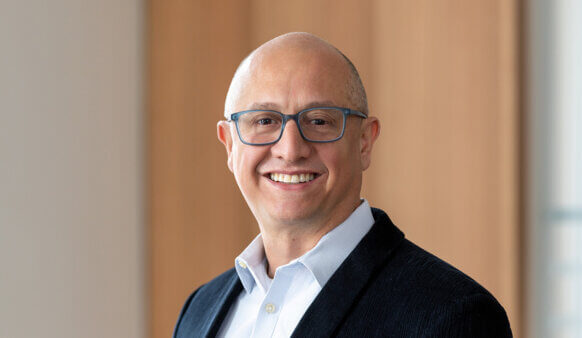
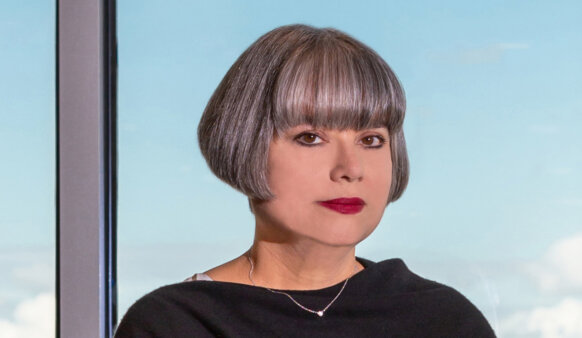
It’s Hispanic Heritage Month, and this year’s theme, “Unidos, Somos Más,” or “Together, We Are More,” celebrates the unity, resilience, and the collective impact of Hispanic and Latino communities. In that spirit, four colleagues in Miami, Houston, Dallas, and Austin answer one question: What do you see differently in design because of where you come from? In these reflections, they explore how culture, place, family, art, and lived experience shape the way they approach design.
The creative process requires finding poetry in the ordinary. It requires seeing the world through diverse lenses, understanding and valuing culture and context, and finding inspiration in the unexpected. It also demands fearlessness, conviction, and resilience—qualities I have experienced and cultivated since childhood as an immigrant. Living across different cultures and languages—adapting, observing, accepting, and embracing the new and unexpected—helped build the foundation from which I draw inspiration and approach my work. My understanding of scale and materiality, my respect for nature, and the belief that “less is more” are deeply rooted in my rich Hispanic heritage.
Storytelling, magical realism, and the influences of art, literature, and music that surrounded me continue to shape my design journey. This complexity allows me to find synthesis and clarity within challenges. I don’t approach ideas solely through the lens of my own circumstances or agendas, but rather as manifestations of a sense of responsibility—an imperative to leave things better than I found them, and to inspire and create the unimagined.
Growing up in a middle- to upper-class family in Colombia was both simple and full of contradictions. I saw abundance and poverty, equality and injustice, beauty and imperfection, order and chaos, peace and violence, music and noise. All of these realities existed at the same time, every day, often within the same community. In my early years, this way of life felt completely normal. More than anything, I remember the happiness within my family. It often eclipsed the difficult aspects of life, giving me a sense of stability despite the contrasts surrounding me.
As I grew older and moved through high school, I began learning more about the rest of the world. I realized that my local environment was very different from many other cultures and places. I became increasingly aware of both the strengths and challenges within my community, and I found myself wanting to enhance the good while helping to improve the bad. I developed a deep passion for art and culture, which ultimately led me to architecture. I saw it as a way to express myself while creating environments that could positively influence people’s lives. My curiosity constantly pushed me to explore, observe, and experience the world beyond my immediate surroundings. Architecture gave me the freedom to think creatively on a larger scale. The vibrant colors, rich textures, and natural materials that surrounded me throughout my childhood profoundly shaped my understanding of beauty and design. These experiences became the foundation of my perspective and continue to influence the way I see the built environment today.
Growing up in Monterrey, Mexico, shaped how I see design in ways I probably didn’t fully recognize until I began working in architecture, and even more so when I joined Perkins&Will. One of the strongest influences was the built environment I grew up in. Monterrey is surrounded by mountains, which are such a defining part of the city, that I grew up constantly aware of how landscape shapes a city’s identity. It taught me to pay attention to place—to how scale, views, light, and the relationship between a building and its surroundings can influence how people experience not only a space, but also how we move through and experience the city as a whole. I’m also influenced by the visual language I grew up around in Mexico: bold colors, typography, architecture, markets, and the way everyday spaces communicate our expressive personality and vibrant culture. Those experiences taught me that design can do more than solve a functional problem; it can express identity and create a sense of belonging.
As a K–12 Client Engagement Leader, that perspective feels especially meaningful in K–12 design. Schools are some of the first environments where young people develop a sense of who they are and where they belong. I think about how spaces can reflect the communities they serve, create moments of discovery, and make students feel seen, considered, and safe. I hope the next generation of Hispanic and Latino designers feels empowered to bring their own cultures, experiences, and perspectives into the profession. Our differences add depth to the way we imagine places and, ultimately, make our collective work stronger.
I was born and raised in Medellín, Colombia, surrounded by mountains, changing landscapes, vibrant colors, and a culture shaped by resilience. From an early age, I was deeply influenced by the beauty of my surroundings and by the way people make meaning and create beauty with what they have. I think that is where my love and curiosity for art and design began. Growing up in such a diverse environment taught me to look closely and take the time to notice light, material, texture, craft, and the contextual relationship between people and place. This also taught me that architecture is never just about a building, but more about memory, identity, adaptation, and the human experience evolving within it.
To me, it is all about understanding context. We bring to each project a level of knowledge, curation, and rigor that comes from our training and our own lived experiences. But good design is not about applying a set of rules based solely on our own context. It is about learning how to pivot, step outside of ourselves, and put ourselves in the position of the person who will actually experience the space. The great thing about architecture lies in the tension between restraint and freedom, rigor and spontaneity, and what we know and what we dare to imagine differently.
I hope the next generation of Hispanic and Latino designers carries forward the qualities that make our community so strong—resilience, creativity, resourcefulness, and a determination to pursue what they believe in. I see a generation willing to break the mold while still respecting the context around them. A generation embracing our heritage—not as something to soften or hide, but as something to bring forward. That’s incredibly powerful.